
Transparent Reporting
Advanced Laboratory Care
At Denver Fertility Care, we believe that clear and honest information helps empower every patient on their path to parenthood. That’s why we participate in both required and voluntary reporting programs designed to protect patient safety and ensure accuracy in every IVF cycle we perform.
All fertility clinics are federally mandated to report IVF success rates to the Centers for Disease Control and Prevention (CDC). This national reporting requirement exists to protect patients and create transparency across the industry.
However, due to legislated budget restrictions, the CDC is not able to deeply verify or audit the data submitted by clinics.
To provide stronger accountability and true data integrity, Denver Fertility Care voluntarily participates in a second, more rigorous program through SART — the Society for Assisted Reproductive Technology. SART membership requires clinics to submit detailed, standardized, and independently reviewed outcomes each year. This additional layer of oversight allows for more accurate comparisons and ensures honest reporting nationwide.
These verified statistics help you understand treatment trends, success rates, and what to expect — while also recognizing that IVF outcomes are deeply personal and influenced by many factors, including age, diagnosis, embryo quality, and your unique medical history.
By choosing a clinic that participates in both CDC and SART reporting, you’re choosing transparency, safety, and a highly trained team committed to state-of-the-art care.
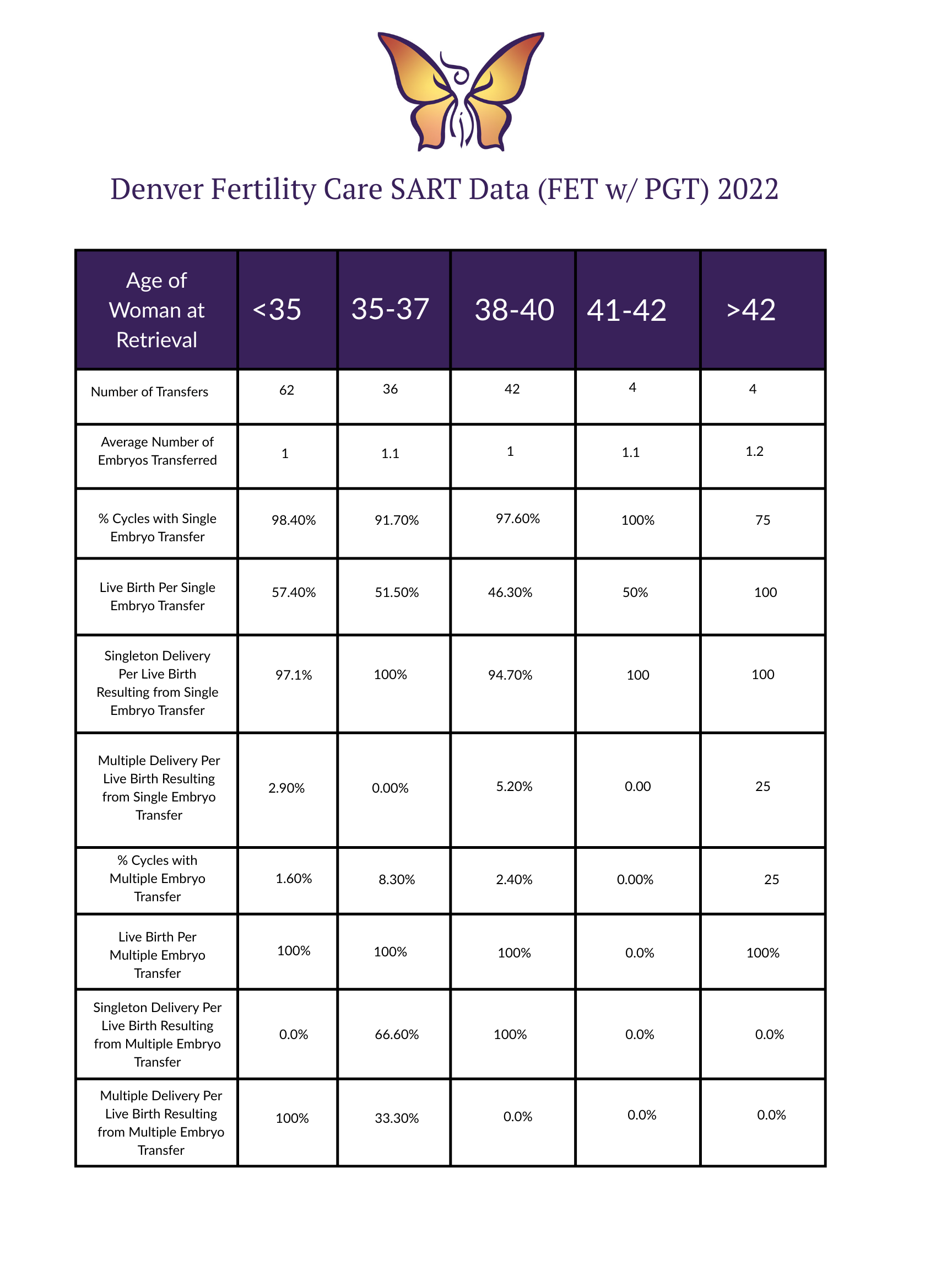
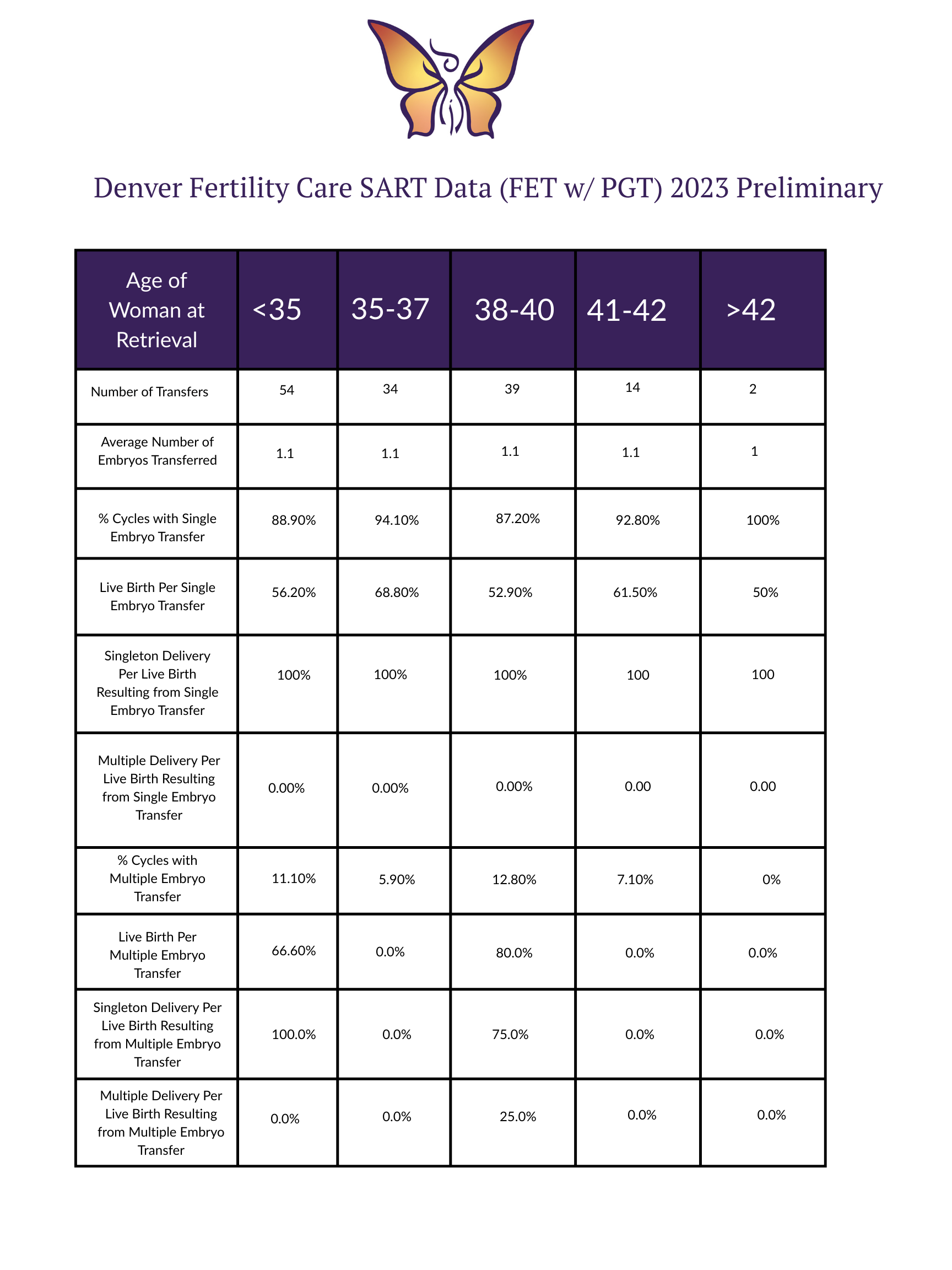
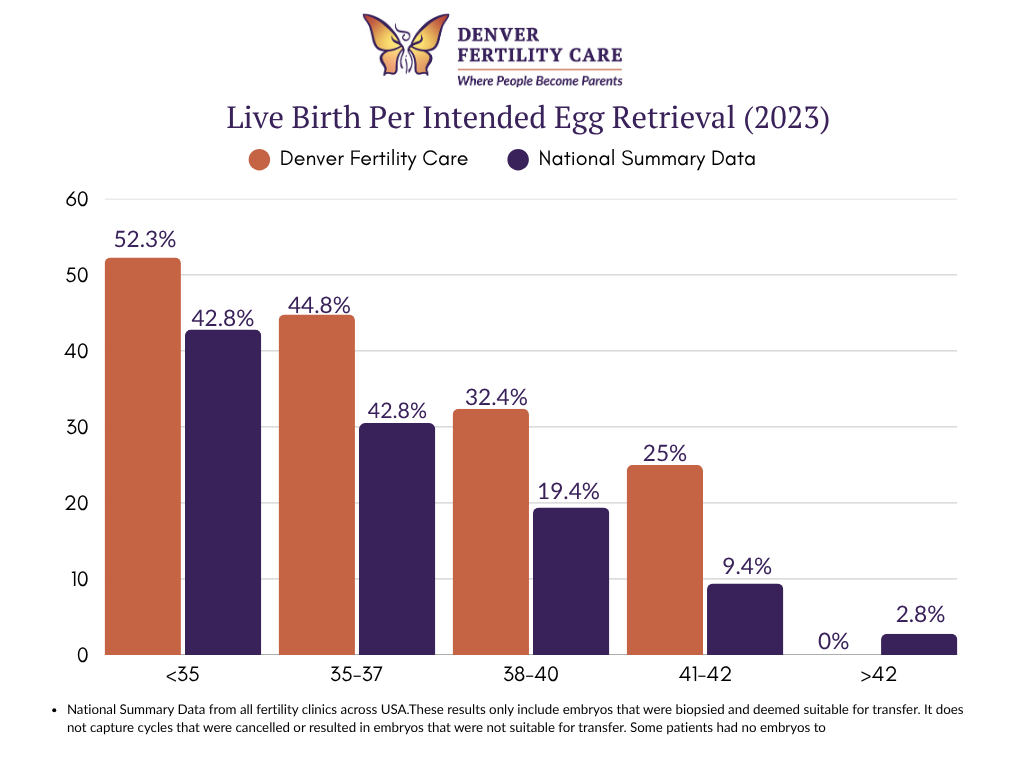
The information below reflects Denver Fertility Care’s official 2023 data as reported to and verified by the Society for Assisted Reproductive Technology (SART) and the Centers for Disease Control and Prevention (CDC).
Success rates are one way to measure progress, but they never tell the full story. A clinic’s outcomes depend on many factors, including patient age, medical history, and treatment approach. For that reason, SART advises patients to use national reports as a general guide rather than a comparison tool of different fertility centers.
At our fertility clinics in Denver and Englewood, we take time to review your individual health profile and discuss how national averages and clinic data relate to your unique journey. During your consultation, our physicians will explain your personalized success outlook in clear, realistic terms.
Our All Inclusive Policy
We believe that everyone deserves a fair opportunity to pursue parenthood. Our team welcomes patients with a wide range of medical backgrounds, including those who may have been turned away elsewhere due to age, hormone levels, or other factors. We evaluate each case individually and provide honest, compassionate guidance about realistic treatment options, never excluding patients to inflate reported success rates.
Every fertility journey is unique. Your potential outcomes depend on many individual factors, from medical history and age to treatment goals and timing. Our care team is here to guide you through every step with clarity, compassion, and honesty.
At Denver Fertility Care, patients can meet with our physicians and IVF coordination team in either of our welcoming offices in Denver and Englewood, CO. During your consultation, we’ll review your medical background, explain how success rates apply to your situation, and outline next steps tailored to your goals.
Whether you’re exploring treatment for the first time or continuing your care with us, our team will provide the information and support you need to make confident decisions about your fertility journey.
Our goal is to create the best possible environment for healthy embryo development and transparent reporting. Since opening our advanced embryology laboratory in 2018, our team has continued to refine every aspect of the IVF process to uphold safety, precision, and accountability.
The laboratory was thoughtfully designed to maintain consistent temperature, air quality, and embryo stability. The facility features advanced incubators, high-resolution microscopes, and the LifeAire purification system, which filters airborne contaminants to help preserve optimal lab conditions.
Behind these systems is a collaborative group of physicians, embryologists, and lab professionals who continuously monitor performance metrics and quality-control benchmarks. Every improvement made in the lab is guided by the same purpose: to provide the highest standard of care and the clearest understanding of treatment results.
Fertility treatment can feel financially overwhelming, and the cost of IVF in the Denver area is often a major concern for patients. Our team is committed to making care more accessible by offering transparent pricing, insurance support, and financing options.
We accept most insurance plans to help reduce or eliminate out-of-pocket costs and will verify coverage before treatment begins so you can plan confidently. For expenses not covered by insurance, we offer flexible financing options for qualified applicants.
Our goal is to remove financial barriers wherever possible so more individuals and families can pursue treatment with confidence and peace of mind.
IVF success rates track the percentage of cycles that lead to a pregnancy or live birth. They're usually broken down by age, diagnosis, and transfer type (fresh vs. frozen embryo). They're a useful starting point, but your individual outcome depends on your specific health picture.
Clinics treat different patient populations. A clinic that takes on more complex cases may report lower averages even though the quality of care is strong. The clinical protocols, laboratory conditions, and embryology team are all important factors in IVF success. Comparing numbers side by side without that context can be misleading.
SART (Society for Assisted Reproductive Technology) is a voluntary program that requires member clinics to submit standardized IVF outcome data. That data gets independently reviewed each year, which means it's verified, not just self-reported. It's the most reliable way to compare clinics.
Every fertility clinic in the U.S. is required to report outcomes to the CDC. But the CDC doesn't have the resources to audit what clinics submit. SART fills that gap with independent review and standardized data collection. Denver Fertility Care participates in both.
Our team in Denver and Englewood combines scientific expertise with compassionate care to support every patient’s fertility journey. From personalized treatment planning to meticulous laboratory standards, each professional contributes specialized knowledge and dedication to achieving the best possible patient experience.
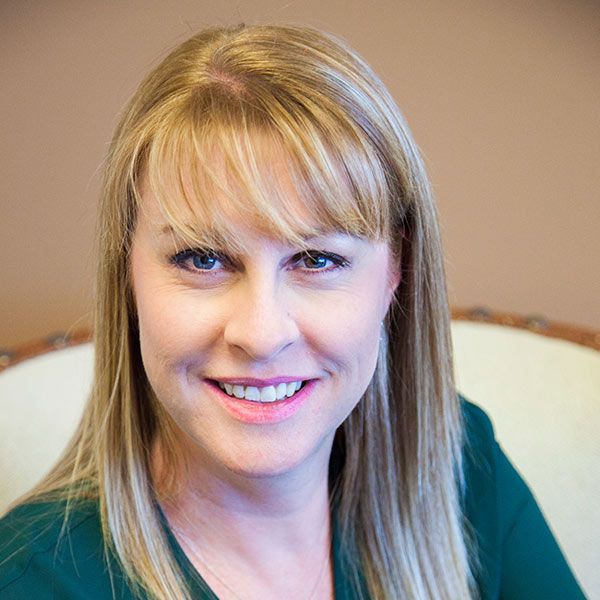
Board-certified in Obstetrics & Gynecology and Reproductive Endocrinology & Infertility, Dr. Ambler provides individualized fertility care rooted in empathy and evidence-based medicine. Her interests include IVF, embryo genetics, and reproductive surgery, and she is known for her holistic, patient-centered approach that blends medical precision with personal connection.
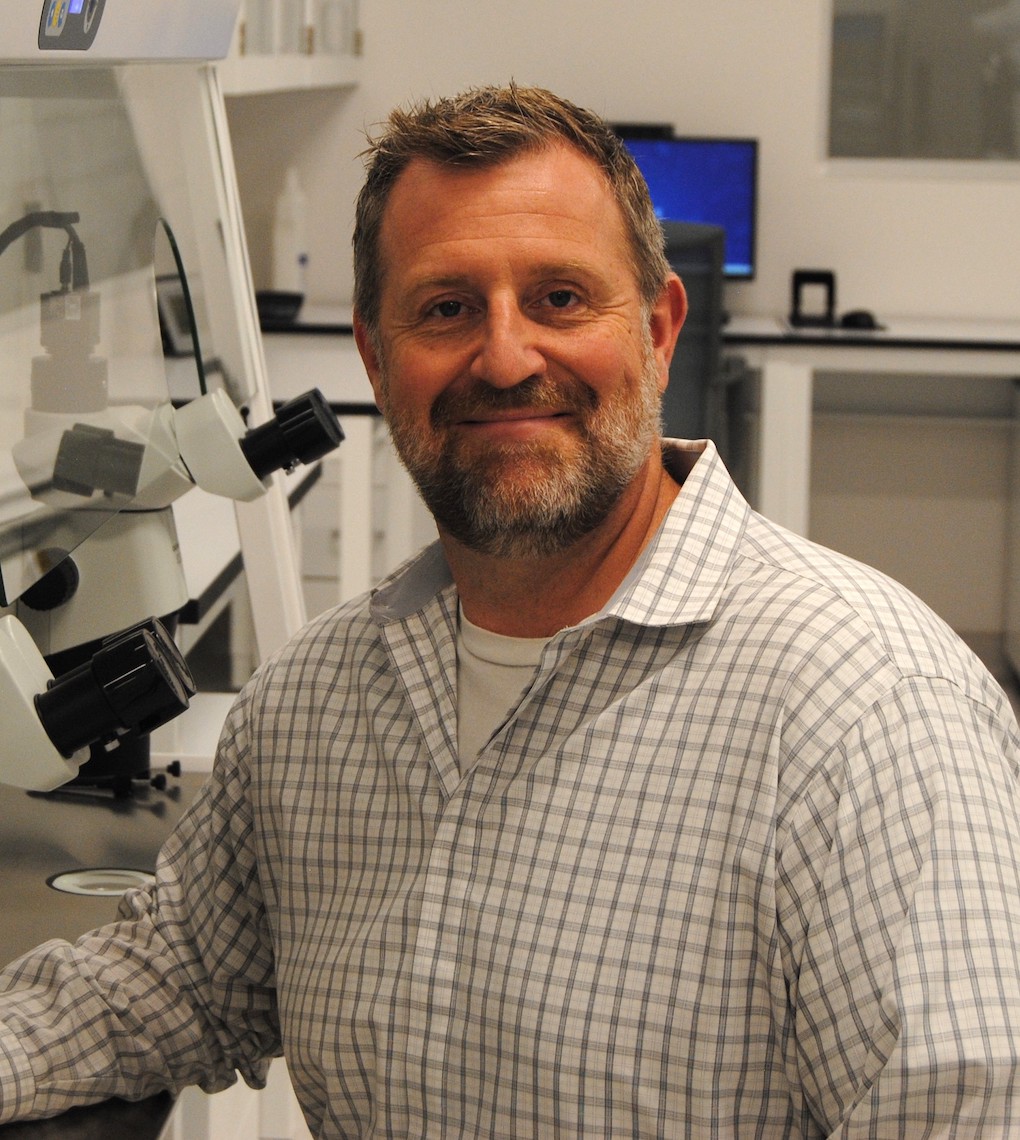
An accomplished embryologist and laboratory director, Dr. Kloos brings more than two decades of experience in IVF, andrology, and tissue banking. He specializes in laboratory quality control and total quality management, ensuring accuracy and consistency across every procedure. His research and leadership continue to advance innovation in reproductive medicine.
A Women’s Health Nurse Practitioner based in Denver, Ellen DiSesa provides trauma-informed, compassionate fertility care. With a background in labor and delivery and OB/GYN nursing, she emphasizes safety, communication, and equity for every patient. Her supportive approach helps individuals navigate fertility treatment with confidence and understanding.
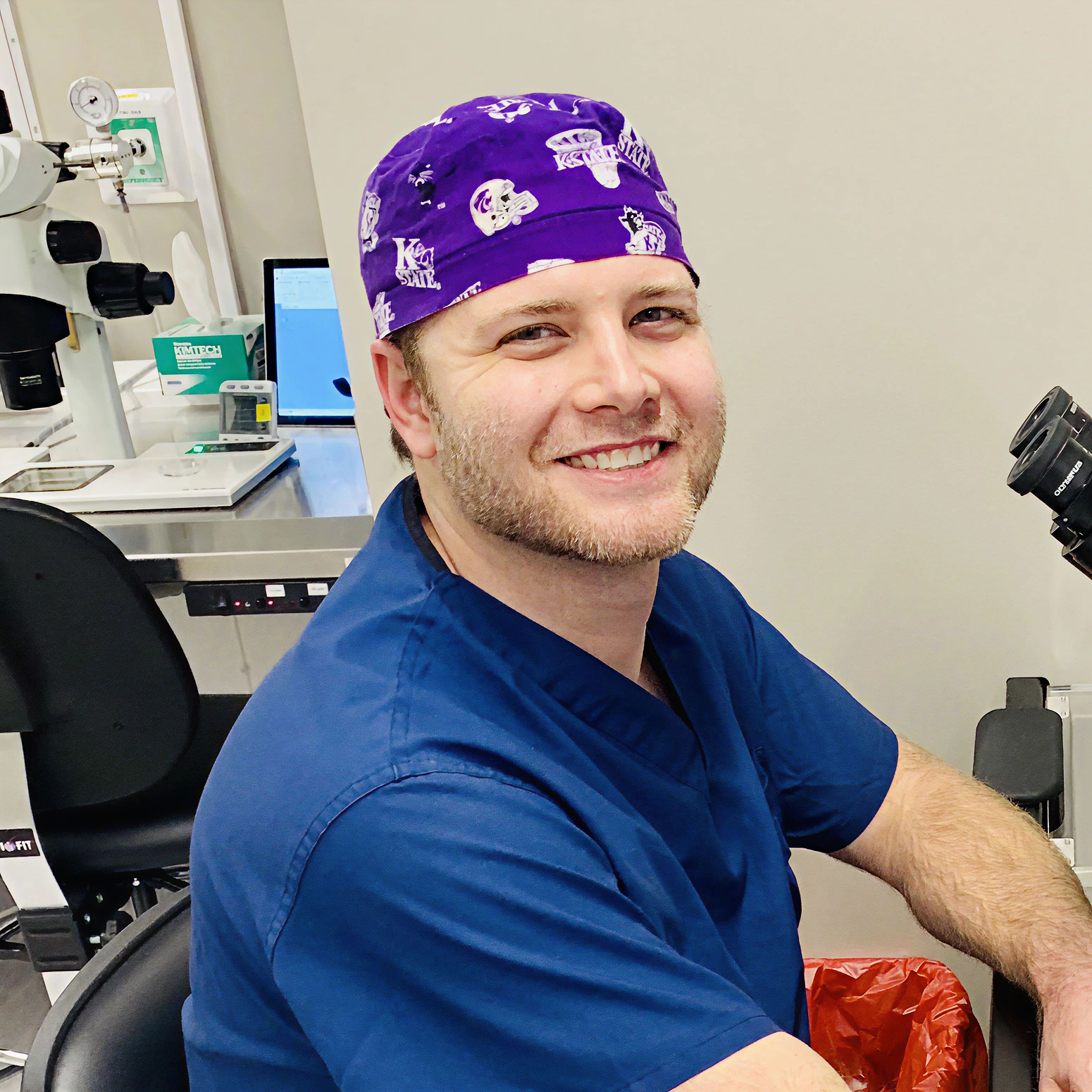
With over a decade of experience in embryology, our laboratory manager, Matt, oversees daily operations in the IVF laboratory with a focus on precision and consistency. He enjoys the scientific challenge of supporting embryo development and takes pride in knowing his work plays a vital role in helping patients pursue their dreams of growing a family.
Dr. Llerena Cari brings extensive experience in reproductive biology and embryology, combining advanced technical skill with a warm, collaborative approach. Her background in ovarian research and fertility preservation allows her to support individualized care for every patient, ensuring each laboratory process is handled with precision and empathy.
Megan began her career in assisted reproductive technology after earning her degree in Biomedical Science. She blends hands-on laboratory expertise with genuine compassion for the patients she serves. Her attention to detail and interest in patient connection reflect the balance of science and care that defines the practice.
Denver Fertility Care was founded in 2010 to provide exceptional, state-of-the-art fertility treatments tailored to each patient's unique journey. Led by Dr. Dana Ambler, who is board certified in Obstetrics and Gynecology as well as in Reproductive Endocrinology and Infertility, our highly trained team is dedicated to helping you achieve the family of your dreams with compassionate, comprehensive care. Our affiliations include:
To learn more, schedule a consultation by filling out our online form, or call: (720) 420-1570.
Locations
We have 2 locations the greater Denver area